 |
   |
| Hyperrealism |Realism |Surrealism | Expressionism | Impressionism | Abstracts |
|


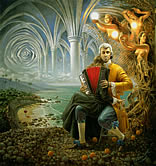
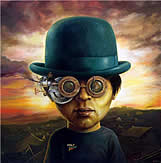
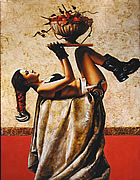
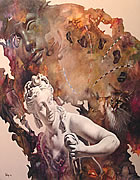

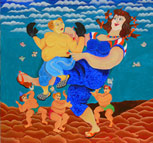
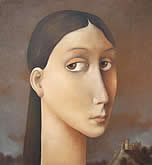
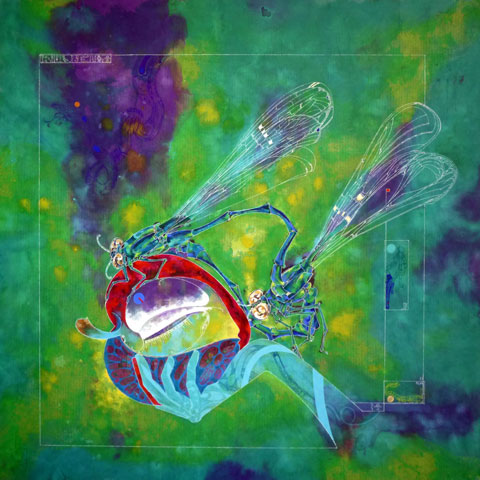
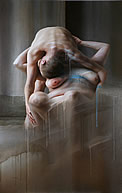
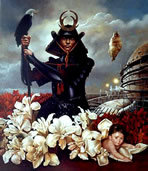
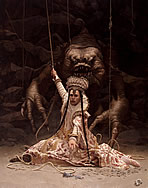
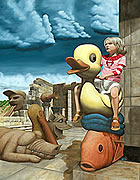
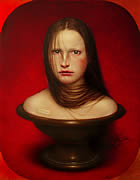
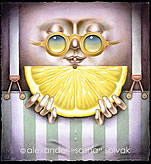
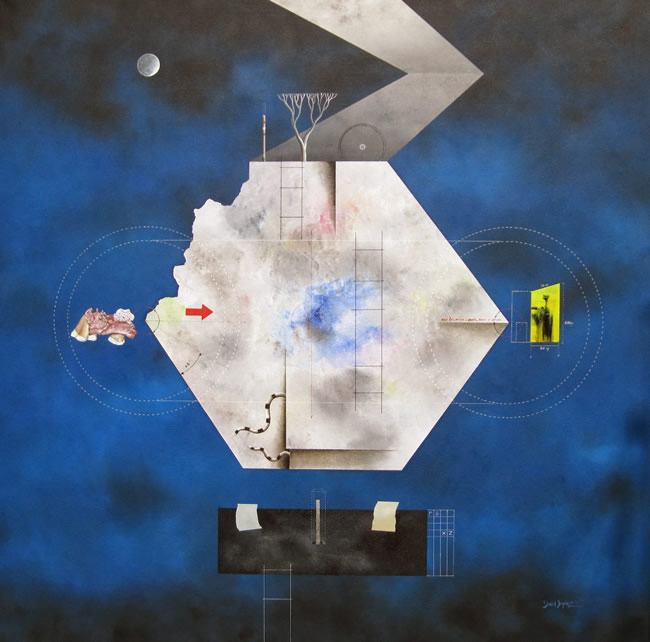
HISTORY
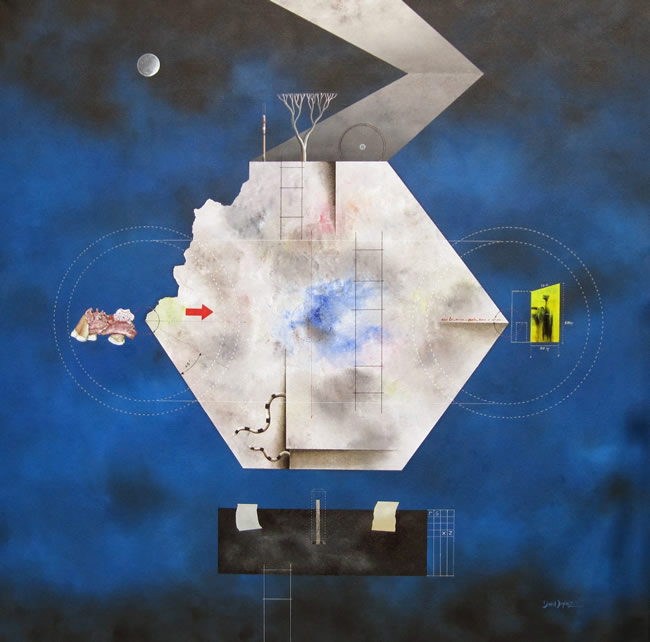
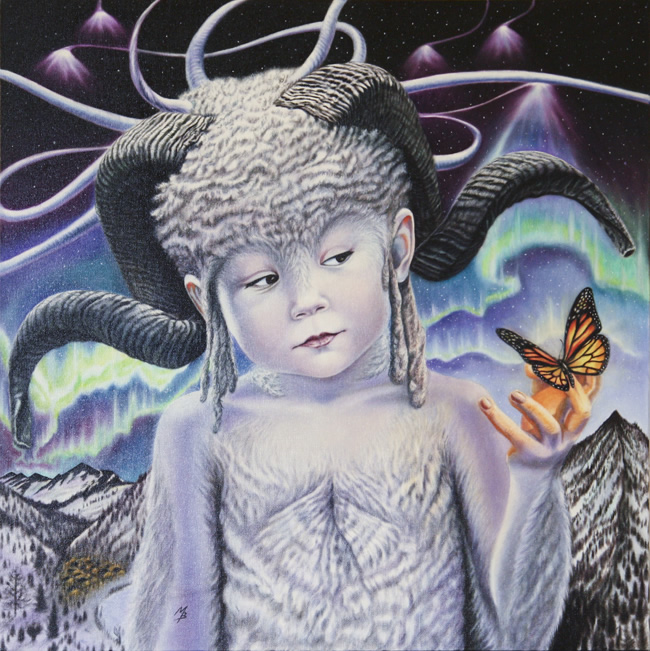
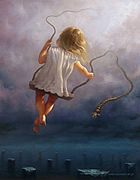
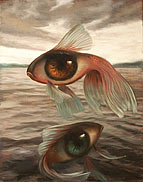
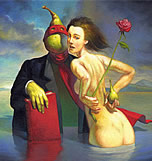
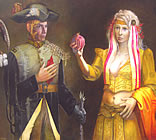
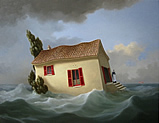
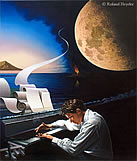
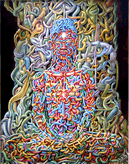
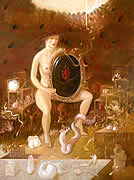
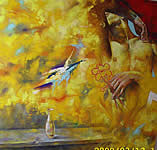
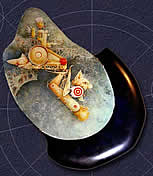
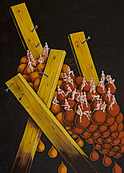
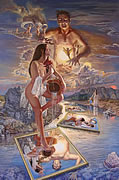
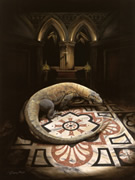
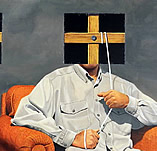
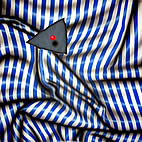
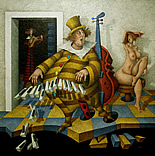
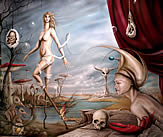
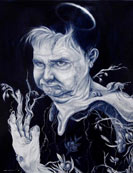
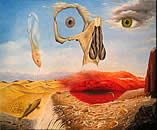
Surrealism is a cultural movement that began in the early-1920s, and is best known for the visual artworks and writings of the group members.
Surrealist works feature the element of surprise, unexpected juxtapositions and non sequitur; however many Surrealist artists and writers regard their work as an expression of the philosophical movement first and foremost, with the works being an artifact. Leader André Breton was explicit in his assertion that Surrealism was above all a revolutionary movement.
Surrealism developed out of the Dada activities of World War I and the most important center of the movement was Paris. From the 1920s on, the movement spread around the globe, eventually affecting the visual arts, literature, film, and music, of many countries and languages, as well as political thought and practice, and philosophy and social theory.
Surrealism is a cultural movement that began in the early-1920s, and is best known for the visual artworks and writings of the group members.
Surrealist works feature the element of surprise, unexpected juxtapositions and non sequitur; however many Surrealist artists and writers regard their work as an expression of the philosophical movement first and foremost, with the works being an artifact. Leader André Breton was explicit in his assertion that Surrealism was above all a revolutionary movement.
Surrealism developed out of the Dada activities of World War I and the most important center of the movement was Paris. From the 1920s on, the movement spread around the globe, eventually affecting the visual arts, literature, film, and music, of many countries and languages, as well as political thought and practice, and philosophy and social theory
Founding of the movement
World War I scattered the writers and artists who had been based in Paris, and while away from Paris many involved themselves in the Dada movement, believing that excessive rational thought and bourgeois values had brought the terrifying conflict upon the world. The Dadaists protested with anti-rational anti-art gatherings, performances, writing and art works. After the war when they returned to Paris the Dada activities continued.
During the war Surrealism's soon-to-be leader André Breton, who had trained in medicine and psychiatry, served in a neurological hospital where he used the psychoanalytic methods of Sigmund Freud with soldiers who were shell-shocked. He also met the young writer Jacques Vaché and felt that he was the spiritual son of writer and 'pataphysician Alfred Jarry, and he came to admire the young writer's anti-social attitude and disdain for established artistic tradition. Later Breton wrote, "In literature, I am successively taken with Rimbaud, with Jarry, with Apollinaire, with Nouveau, with Lautréamont, but it is Jacques Vaché to whom I owe the most."
Back in Paris, Breton joined in the Dada activities and also started the literary journal Littérature along with Louis Aragon and Philippe Soupault. They began experimenting with automatic writing—spontaneously writing without censoring their thoughts—and published the "automatic" writings, as well as accounts of dreams, in Littérature. Breton and Soupault delved deeper into automatism and wrote The Magnetic Fields (Les Champs Magnétiques) in 1919. They continued the automatic writing, gathering more artists and writers into the group, and coming to believe that automatism was a better tactic for societal change than the Dada attack on prevailing values. In addition to Breton, Aragon and Soupault the original Surrealists included Paul Éluard, Benjamin Péret, René Crevel, Robert Desnos, Jacques Baron, Max Morise, Marcel Noll, Pierre Naville, Roger Vitrac, Simone Breton, Gala Éluard, Max Ernst, Man Ray, Hans Arp, Georges Malkine, Michel Leiris, Georges Limbour, Antonin Artaud, Raymond Queneau, André Masson, Joan Miró, Marcel Duchamp, Jacques Prévert and Yves Tanguy.
As they developed their philosophy they felt that while Dada rejected categories and labels, Surrealism would advocate the idea that ordinary and depictive expressions are vital and important, but that the sense of their arrangement must be open to the full range of imagination according to the Hegelian Dialectic. They also looked to the Marxist dialectic and the work of such theorists as Walter Benjamin and Herbert Marcuse.
Freud's work with free association, dream analysis and the hidden unconscious was of the utmost importance to the Surrealists in developing methods to liberate imagination. However, they embraced idiosyncrasy, while rejecting the idea of an underlying madness or darkness of the mind. (Later the idiosyncratic Salvador Dalí explained it as: "There is only one difference between a madman and me. I am not mad."
The group aimed to revolutionize human experience, including its personal, cultural, social, and political aspects, by freeing people from what they saw as false rationality, and restrictive customs and structures. Breton proclaimed, the true aim of Surrealism is "long live the social revolution, and it alone!" To this goal, at various times surrealists aligned with communism and anarchism.
In 1924 they declared their intents and philosophy with the issuance of the first Surrealist Manifesto. That same year they established the Bureau of Surrealist Research, and began publishing the journal La Révolution surréaliste.
La Révolution surréaliste
Shortly after releasing the first Surrealist Manifesto in 1924, the Surrealists published the inaugural issue of La Révolution surréaliste and publication continued into 1929. Pierre Naville and Benjamin Péret were the initial directors of the publication and modeled the format of the journal on the conservative scientific review La Nature. The format was deceiving, and to the Surrealists' delight La Révolution surréaliste was consistently scandalous and revolutionary. The journal focused on writing with most pages densely packed with columns of text, but also included reproductions of art, among them works by Giorgio de Chirico, Max Ernst, André Masson and Man Ray.
Expansion
The movement in the mid-1920s was characterized by meetings in cafes where the Surrealists played collaborative drawing games and discussed the theories of Surrealism. The Surrealists developed a variety of techniques such as automatic drawing.
Breton initially doubted that visual arts could even be useful in the Surrealist movement since they appeared to be less malleable and open to chance and automatism. This caution was overcome by the discovery of such techniques as frottage, and decalcomania.
Soon more visual artists joined Surrealism including Giorgio de Chirico, Salvador Dalí, Enrico Donati, Alberto Giacometti, Valentine Hugo, Méret Oppenheim, Toyen, Grégoire Michonze, and Luis Buñuel. Though Breton admired Pablo Picasso and Marcel Duchamp and courted them to join the movement, they remained peripheral.
More writers also joined, including former Dadaist Tristan Tzara, René Char, Georges Sadoul, André Thirion and Maurice Heine.
In 1925 an autonomous Surrealist group formed in Brussels becoming official in 1926. The group included the musician, poet and artist E.L.T. Mesens, painter and writer René Magritte, Paul Nougé, Marcel Lecomte, Camille Goemans, and André Souris. In 1927 they were joined by the writer Louis Scutenaire. They corresponded regularly with the Paris group, and in 1927 both Goemans and Magritte moved to Paris and frequented Breton's circle.
The artists, with their roots in Dada and Cubism, the abstraction of Wassily Kandinsky and Expressionism, and Post-Impressionism, also reached to older "bloodlines" such as Hieronymus Bosch, and the so-called primitive and naive arts.
André Masson's automatic drawings of 1923, are often used as the point of the acceptance of visual arts and the break from Dada, since they reflect the influence of the idea of the unconscious mind. Another example is Alberto Giacometti's 1925 Torso, which marked his movement to simplified forms and inspiration from preclassical sculpture.
However, a striking example of the line used to divide Dada and Surrealism among art experts is the pairing of 1925's Little Machine Constructed by Minimax Dadamax in Person (Von minimax dadamax selbst konstruiertes maschinchen) with The Kiss (Le Baiser) from 1927 by Ernst. The first is generally held to have a distance, and erotic subtext, whereas the second presents an erotic act openly and directly. In the second the influence of Miró and the drawing style of Picasso is visible with the use of fluid curving and intersecting lines and colour, where as the first takes a directness that would later be influential in movements such as Pop art.
Giorgio de Chirico, and his previous development of Metaphysical art, was one of the important joining figures between the philosophical and visual aspects of Surrealism. Between 1911 and 1917, he adopted an unornamented depictional style whose surface would be adopted by others later. The Red Tower (La tour rouge) from 1913 shows the stark colour contrasts and illustrative style later adopted by Surrealist painters. His 1914 The Nostalgia of the Poet (La Nostalgie du poete) has the figure turned away from the viewer, and the juxtaposition of a bust with glasses and a fish as a relief defies conventional explanation. He was also a writer, and his novel Hebdomeros presents a series of dreamscapes with an unusual use of punctuation, syntax and grammar designed to create a particular atmosphere and frame around its images. His images, including set designs for the Ballets Russes, would create a decorative form of visual Surrealism, and he would be an influence on the two artists who would be even more closely associated with Surrealism in the public mind: Salvador Dalí and Magritte. He would, however, leave the Surrealist group in 1928.
In 1924, Miro and Masson applied Surrealism theory to painting explicitly leading to the La Peinture Surrealiste exhibition of 1925. La Peinture Surrealiste exhibition was the first ever Surrealist exhibition at Gallerie Pierre in Paris, and displayed works by Masson, Man Ray, Klee, Miró, and others. The show confirmed that Surrealism had a component in the visual arts (though it had been initially debated whether this was possible), and techniques from Dada, such as photomontage, were used. The following year, on March 26, 1926 Galerie Surréaliste opened with an exhibition by Man Ray.
Breton published Surrealism and Painting in 1928 which summarized the movement to that point, though he continued to update the work until the 1960s.
Golden age
Throughout the 1930s, Surrealism continued to become more visible to the public at large. A Surrealist group developed in Britain and, according to Breton, their 1936 London International Surrealist Exhibition was a high water mark of the period and became the model for international exhibitions.
Dalí and Magritte created the most widely recognized images of the movement. Dalí joined the group in 1929, and participated in the rapid establishment of the visual style between 1930 and 1935.
Surrealism as a visual movement had found a method: to expose psychological truth by stripping ordinary objects of their normal significance, in order to create a compelling image that was beyond ordinary formal organization, in order to evoke empathy from the viewer.
1931 marked a year when several Surrealist painters produced works which marked turning points in their stylistic evolution: Magritte's Voice of Space (La Voix des airs) is an example of this process, where three large spheres representing bells hang above a landscape. Another Surrealist landscape from this same year is Yves Tanguy's Promontory Palace (Palais promontoire), with its molten forms and liquid shapes. Liquid shapes became the trademark of Dalí, particularly in his The Persistence of Memory, which features the image of watches that sag as if they are melting.
The characteristics of this style - a combination of the depictive, the abstract, and the psychological - came to stand for the alienation which many people felt in the modern period, combined with the sense of reaching more deeply into the psyche, to be "made whole with one's individuality".
From 1936 through 1938 Wolfgang Paalen, Gordon Onslow Ford and Roberto Matta joined the group. Paalen contributed Fumage and Onslow Ford Coulage as new pictorial automatic techniques.
Long after personal, political and professional tensions fragmented the Surrealist group, Magritte and Dalí continued to define a visual program in the arts. This program reached beyond painting, to encompass photography as well, as can be seen from a Man Ray self portrait, whose use of assemblage influenced Robert Rauschenberg's collage boxes.
During the 1930s Peggy Guggenheim, an important American art collector, married Max Ernst and began promoting work by other Surrealists such as Tanguy and the British artist John Tunnard.
Major exhibitions in the 1930s
- 1936 - London International Surrealist Exhibition is organised in London by the art historian Herbert Read, with an introduction by André Breton.
- 1936 - Museum of Modern Art in New York shows the exhibition Fantastic Art, Dada and Surrealism.
- 1938 - A new International Surrealist Exhibition was held at the Beaux-arts Gallery, Paris, with more than 60 artists from different countries, and showed around 300 paintings, objects, collages, photographs and installations. The Surrealists wanted to create an exhibition which in itself would be a creative act and called on Marcel Duchamp to do so. At the exhibition's entrance he placed Salvador Dalí's Rainy Taxi (an old taxi rigged to produce a steady drizzle of water down the inside of the windows, and a shark-headed creature in the driver's seat and a blond mannequin crawling with live snails in the back) greeted the patrons who were in full evening dress. Surrealist Street filled one side of the lobby with mannequins dressed by various Surrealists. He designed the main hall to seem like subterranean cave with 1,200 coal bags suspended from the ceiling over a coal brazier with a single light bulb which provided the only lighting, so patrons were given flashlights with which to view the art. The floor was carpeted with dead leaves, ferns and grasses and the aroma of roasting coffee filled the air. Much to the Surrealists' satisfaction the exhibition scandalized the viewers
Justart-e.com 2009-2015